
Content Cluster Strategy vs Blog Posts: Smarter SEO Strategy Guide
If you’re serious about content marketing in 2026, understanding the difference between a content cluster strategy and traditional blog posts is essential. A content cluster strategy is no longer just a trend; it has become a core SEO approach for building authority, improving rankings, and driving consistent organic traffic.
Many businesses still rely on standalone blogs, but search engines now prioritise structure, depth, and relevance. That’s where a content cluster strategy clearly stands out.
In this guide, we’ll break down both approaches, compare their SEO impact, and help you choose the right direction.
What is a Content Cluster Strategy?

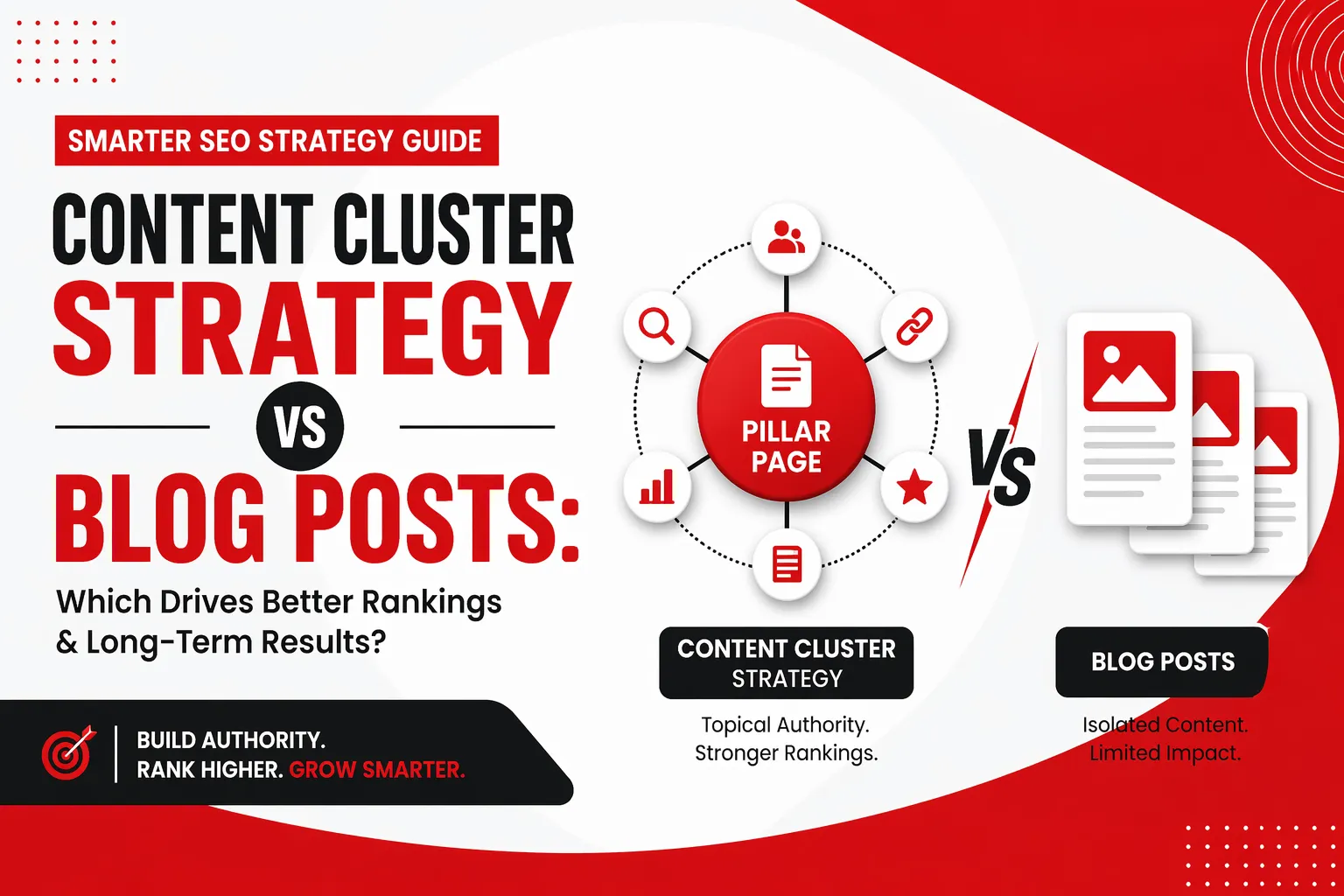
A content cluster strategy is a structured approach where multiple related content pieces are grouped around a central topic, helping search engines understand your website’s depth, relevance, and expertise in a specific niche clearly.
Key elements include:
- A pillar page covering a broad, high-volume topic
- Supporting articles targeting specific subtopics
- Strategic interlinking between all related pages
- Consistent content updates to maintain relevance
- Clear hierarchy that improves user navigation
This approach supports semantic SEO by connecting ideas and improving context, rather than focusing only on isolated keywords.
What Are Traditional Blog Posts?

Traditional blog posts are standalone pieces of content created around a single idea or keyword, often published without a broader structure or connection to other relevant content on the website.
They typically include:
- One main topic or keyword focus
- Limited or no internal linking
- Independent publishing without content grouping
- Short-term traffic goals
- Less contribution to the overall site authority
While useful, they lack the depth and scalability offered by a pillar page strategy.
Content Cluster Strategy vs. Blog Posts: Key Differences
A well-planned content cluster strategy also strengthens internal linking SEO, helping search engines crawl and understand your content better.
Why Content Clusters Work Better in 2026
Search engines now focus on expertise, depth, and user value. A content cluster strategy allows you to:
- Cover a topic in detail instead of surface level
- Rank for multiple keywords within one topic
- Build trust and authority in your niche
- Improve user engagement and session duration
Using topic clusters SEO, you’re not just targeting keywords; you’re building a complete content ecosystem.
Want to implement a high-performing content cluster strategy for your business? Let our SEO experts create a data-driven plan tailored to your niche.
Boost Your SEO StrategyWhen Should You Still Use Blog Posts?
Standalone blogs still have their place. They work best for:
- Trending industry updates
- Quick guides or actionable tips
- Company news and announcements
- Event coverage or summaries
These can later be integrated into your content cluster strategy for better long-term results.
Common Mistakes to Avoid
- Publishing content without a clear topic clustering structure
- Ignoring internal linking between related content pages
- Targeting random keywords without a proper research strategy
- Creating thin content without depth or real value
- Not updating old content for accuracy and relevance
- Overlapping topics are causing keyword cannibalisation issues
- Poor navigation structure is affecting user experience badly
- Focusing only on quantity over quality content
Not sure where to start? Visit our contact page and let us design a complete content cluster strategy for your brand.
Contact nowHow to Build an Effective Content Cluster Strategy
1. Choose a core topic carefully
Start with a broad topic relevant to your business and audience. It should have a strong search demand and enough scope to create multiple supporting articles.
2. Create a detailed pillar page
Your pillar page should cover the topic comprehensively, giving readers an overview while linking out to deeper, more specific articles.
3. Identify meaningful subtopics
Break your main topic into smaller, focused areas based on user intent, keyword research, and common search queries.
4. Develop high-quality cluster content
Each supporting article should provide real value, answer specific questions, and go deeper into the subject without repeating the pillar page.
5. Use strategic internal linking
Link all cluster articles back to the pillar page and connect related posts to each other naturally to strengthen structure and SEO.
6. Optimise and update regularly
SEO is not one-time work. Keep refreshing content, adding new clusters, and improving existing pages to maintain rankings.
7. Track performance and refine strategy
Monitor traffic, rankings, and engagement to identify what’s working and where improvements are needed.
A well-executed content cluster strategy grows stronger over time and continues delivering results.
Need quick guidance? Call our team today and get expert advice on building a winning content cluster strategy.
Speak With an SEO ExpertFinal Takeaway
While blog posts still serve a purpose, they are no longer enough on their own. A content cluster strategy provides structure, depth, and long-term SEO benefits that standalone content cannot achieve. If you want sustainable growth, better rankings, and stronger authority, investing in a content cluster strategy is the right move.
FAQs
1. What is a content cluster strategy?
It is a structured approach that organises related content around a central topic to improve SEO, build authority, and enhance user experience across your website.
2. Are blog posts outdated in SEO?
No, blog posts are still relevant, but they perform much better when integrated into a structured content strategy rather than being published as standalone pieces.
3. How many articles should a cluster have?
A typical content cluster includes around 5 to 10 supporting articles, depending on the topic depth, competition level, and overall content strategy goals.
4. Why is internal linking important?
Internal linking helps search engines crawl your website more efficiently, improves user navigation, and distributes authority across pages to boost overall SEO performance.
5. How long before results appear?
SEO results from a content cluster strategy usually take around 3 to 6 months, depending on competition, content quality, and consistency of publishing.
It is a structured approach that organises related content around a central topic to improve SEO, build authority, and enhance user experience across your website.
No, blog posts are still relevant, but they perform much better when integrated into a structured content strategy rather than being published as standalone pieces.
A typical content cluster includes around 5 to 10 supporting articles, depending on the topic depth, competition level, and overall content strategy goals.
Internal linking helps search engines crawl your website more efficiently, improves user navigation, and distributes authority across pages to boost overall SEO performance.
SEO results from a content cluster strategy usually take around 3 to 6 months, depending on competition, content quality, and consistency of publishing.
Spotlight GB
Editorial Team


