How Can You Recover from a Google Ranking Drop in 2026?

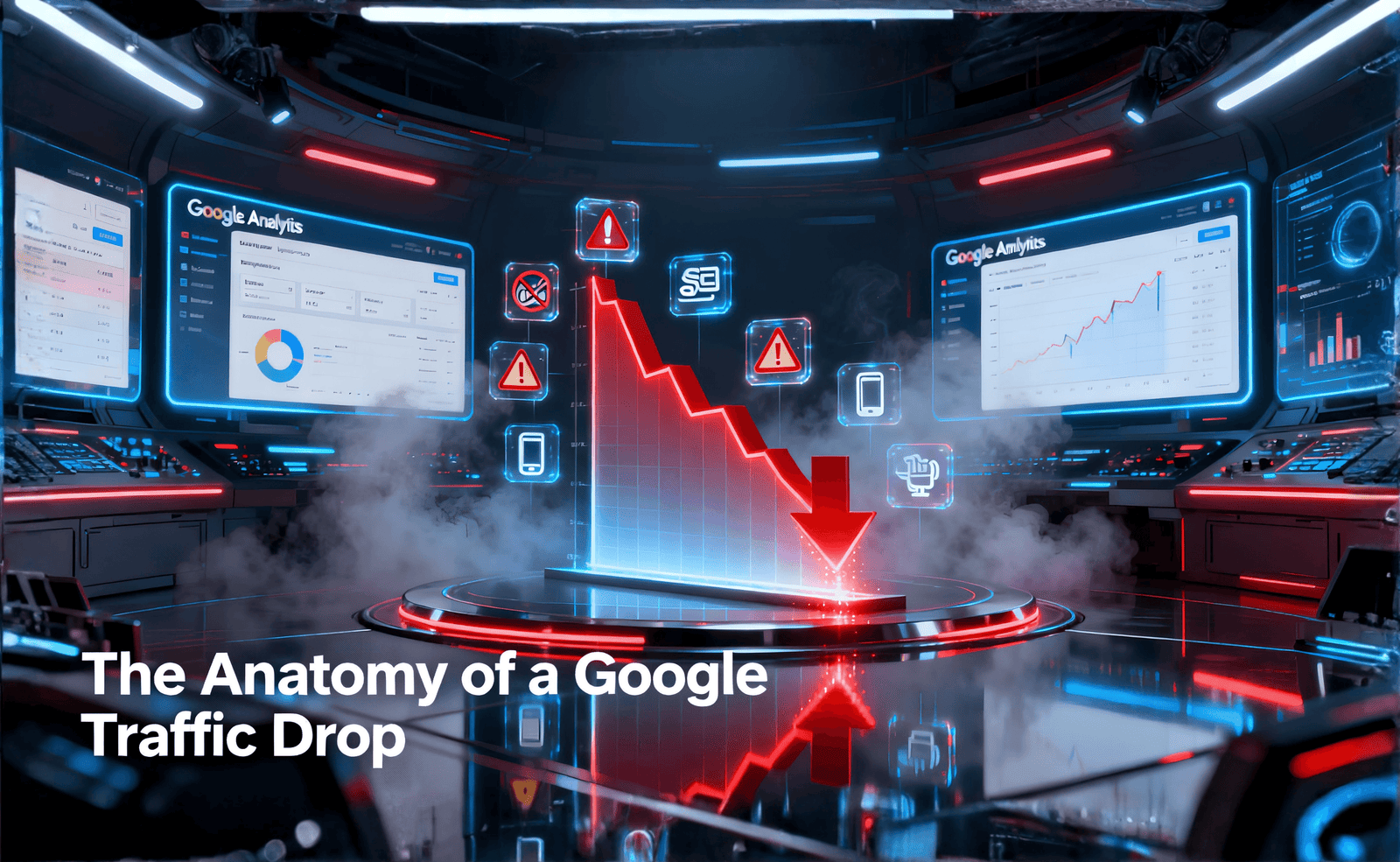
You wake up, open your analytics dashboard, and your traffic graph is sinking. That sharp drop in visits isn’t just bad luck. In many cases, it marks the start of a deeper problem: a hit to your site’s organic search visibility. But it's not necessarily the end of the line. With a proper Google ranking drop recovery strategy, you can find the cause and rebuild, often stronger than before.
If you’ve ever wondered how do I check my website ranking on Google, or tried to monitor your website keyword rankings only to watch them slide, this guide will give you clarity, structure, and a plan.
Why Your Organic Traffic Is Dropping
In 2024–2025, the SEO world has changed faster than ever. New AI-powered features, updated ranking criteria, and shifting user behaviour all play a role. Even strong sites have experienced sharp declines, making Google ranking drop recovery more important as algorithms evolve and clicks move away from traditional results.
Main reasons for recent traffic drops:
- AI answers reduce click-through because users get information on the results page.
- Core updates in 2025 caused fast declines of 20–50% for many sites.
- Google’s ranking factors now favour relevance, freshness, and intent.
- New SERP layouts push organic listings lower.
- Users rely more on summaries and snapshots instead of visiting websites.
According to recent data, some websites saw a 34.5% decline in organic traffic after Google’s AI-driven changes rolled out, highlighting the need for proactive Google ranking drop recovery measures.
Google Ranking Drop Recovery: Step-by-Step Guide for Top Pages
Learn a step-by-step approach to Google ranking drop recovery and restore your top pages’ traffic effectively.
Part 1: Don’t Panic – Initial Assessment & Triage
Before you start making changes, focus on understanding what happened. This is where your search traffic analysis, segmentation, and ranking data come in, essential first steps for any Google ranking drop recovery plan.
Step 1: Verify the Drop
Use both Google Analytics and Google Search Console.
- In GA4, check the “Organic Search” channel and compare periods.
- In GSC, review clicks, impressions, and average Google website ranking over time.
This confirms whether the issue affects your google serp rank, queries, or pages, which is critical for Google ranking drop recovery.
Step 2: Segment the Data
Break the drop-down by:
- Date of decline
- Affected pages
- Specific queries
- Countries and devices
This breakdown gives you your first clues and helps guide your ranking recovery roadmap.
Part 2: The Diagnostic Deep Dive – Finding the “Why”

With your initial assessment complete, it’s time to put on your detective hat. The cause of your Google traffic drop will fall into one of several categories. Systematic analysis is key to effective Google ranking drop recovery.
Check 1: Technical SEO Health
Technical SEO issues can cause an immediate decline in ranking performance. Start with a website health assessment.
A. Indexation Issues
Review GSC’s Indexing report.
Check for:
- “Crawled – not indexed.”
- Accidental noindex tags
- Redirect problems
- Crawl and index checks
If you need professional help to identify and fix these issues, our Technical SEO services can ensure your site is fully optimised and crawlable.
B. Manual Actions
If you have one, you must resolve it before any Google ranking drop recovery can begin.
C. Site Speed & Core Web Vitals
Slow performance harms rankings. Look at:
- Page speed improvements
- Mobile experience optimisation
- User engagement metrics
D. Mobile Usability
Most ranking losses on mobile come from:
- Text size problems
- Tap target issues
- Layout shifting
What to do
Run a full site audit. Check Google’s Indexing report. Evaluate Core Web Vitals and mobile-usability reports. Fix broken redirects, noindex issues, sitemap problems, and slow pages immediately.
Check 2: Google Algorithm Updates
Not all traffic drops are your fault; many result from Google algorithm shifts. Major core updates can cause significant ranking changes.

How to Check for an Algorithm Update
When you notice a Google traffic drop, compare the date with known update timelines. Sites like Search Engine Land and Moz keep reliable records. If the dip lines up with a core update, there’s a good chance your rankings were affected. This is also a good moment to check your website ranking across key pages to see which areas took the biggest hit.
What to do
Focus on improving content quality and demonstrating E-E-A-T (Experience, Expertise, Authoritativeness, Trustworthiness). Algorithm-related drops signal that Google reassessed your content, so recovery requires ongoing improvements rather than quick fixes.
Check 3: Backlink Profile Analysis
Your backlinks play a key role in your site’s authority, and changes here can cause a Google traffic drop. Conduct a thorough Backlink Authority Review to understand what’s impacting your rankings.
A. Lost High-Quality Backlinks
If major sites linking to you remove their links or shut down, even a few lost backlinks can affect traffic. Tools like Ahrefs, Semrush, or Moz can help you track lost links. Your focus should be on earning new, high-quality backlinks to replace any that are lost.
B. Gained Toxic or Spammy Backlinks
An influx of low-quality or irrelevant backlinks can trigger penalties, whether algorithmic or manual. Analyse new backlinks for suspicious sources and submit any toxic links to Google’s Disavow Tool to protect your site’s authority.
Ready to strengthen your backlink profile?
Explore off-page SEO services
Check 4: On-Page SEO & Content Quality
Even well-structured content can decay over time. As 2025 data suggests, content that hasn’t been updated in 90+ days tends to underperform.
Common issues:
- Thin or outdated content
- Keyword cannibalisation (multiple pages competing for the same terms)
- Missing updated statistics, broken links, and outdated information
What to do
Go through the pages with the biggest traffic losses. Refresh them with up-to-date info, better depth, improved formatting, and clearer structure. Ensure each page serves a unique purpose and avoid internal competition.
To systematically optimise your content and fix on-page issues: check out our On-Page SEO services.
Check 5: Search Intent Changes & SERP Features
User behaviour and search intent evolve constantly. What ranked well last year may no longer fit what users expect. In 2025, many informational queries triggered AI-generated answers on SERPs, reducing clickthrough rates.
That means even if your page ranks high, it may get fewer visits if Google now shows a summary or if user intent shifted toward video, listicles, or product pages.
What to do
Re-evaluate the query types you target. Check what kinds of pages Google now shows for those queries (e.g, video, listicle, FAQ). Adjust your content format or pivot to better match search intent.
Part 3: The Recovery Action Plan – How to Fix a Google Traffic Drop
You’ve done the diagnosis, and you know the “why.” Now it’s time to act. Your recovery plan should directly address the root cause of your Google traffic drop.
If the problem is technical
- Fix indexing issues, noindex tags, redirect loops, and sitemap errors
- Improve page speed, optimise images, enable caching, streamline code
- Enhance mobile performance and usability
If algorithm changes triggered the drop
- Audit and improve content quality: add depth, expert quotes, citations, updated data
- Focus on user value: make content helpful and thoroughly answer search intent
- Follow an ongoing strategy, don’t expect instant recovery
If backlinks are the issue
- Recover lost high-value links where possible
- Disavow toxic links carefully
- Build new, relevant backlinks to restore authority
If content is the problem
- Refresh outdated or thin content thoroughly (not just minor tweaks)
- Consolidate overlapping content to avoid cannibalisation
- Match the content format and depth to what currently ranks
If the search intent or SERP format changed
- Adapt content format (e.g., create listicles, videos, or FAQ pages if those dominate)
- Use schema markup where relevant to help your pages stand out
- Focus on providing user-friendly, valuable information that complements rather than replicates AI summaries
Part 4: Prevention – Building a Resilient SEO Strategy
The best way to handle future Google traffic drops is to create a site that can withstand them. Once your traffic has recovered, shift from reactive fixes to proactive planning by implementing strong search engine optimisation strategies.
1. Diversify Your Traffic Sources
Relying solely on Google is risky. Grow your email list, maintain an active social media presence, explore paid ads, and build a loyal community. When the next drop occurs, these channels will help cushion the impact.
2. Monitor Your Performance
Use Google Search Console and Analytics to track changes in traffic, rankings, or impressions. Early detection makes it easier to diagnose issues and take corrective action. Regularly check your website ranking to stay on top of shifts.
3. Focus on E-E-A-T and User Value
Prioritise experience, expertise, authoritativeness, and trustworthiness in every piece of content. Aim to provide the best possible resource for your audience. This approach aligns with Google’s long-term goals and reduces vulnerability to algorithm changes.
4. Conduct Regular SEO Audits
Don’t wait for a traffic drop to identify problems. Perform comprehensive technical and content audits at least annually. Proactive audits catch minor issues before they escalate into major traffic losses. Tools like Moz offer templates, or you can hire professionals for a detailed search engine optimisation strategy audit.
Get Professional SEO Support
Conclusion
A sudden traffic drop is scary, but also a chance to re-evaluate, improve, and come back stronger. Use this guide as your roadmap: measure data carefully, diagnose the root cause, implement fixes, then build long-term resilience. With a clear Google ranking drop recovery plan in hand, you don’t just react to drops, you future-proof your site.